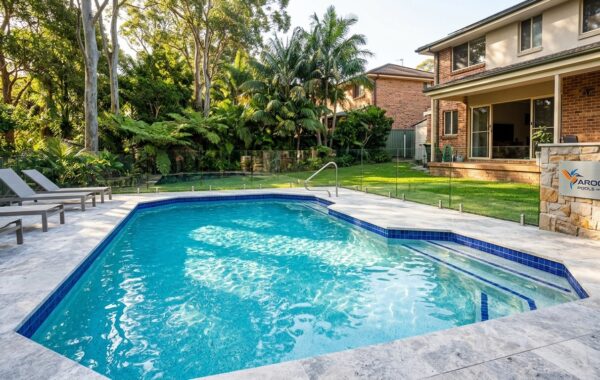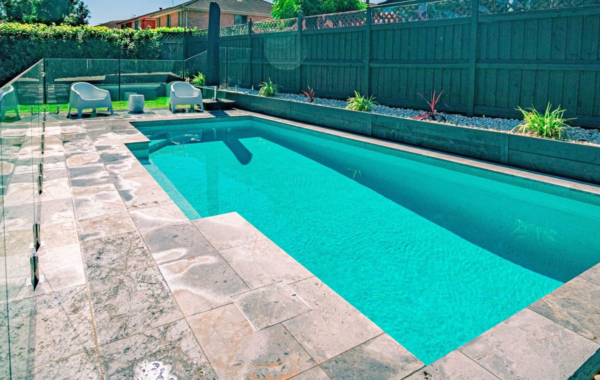


Keeping backyard water clean should never eat up your entire Saturday morning. Good saltwater swimming pool maintenance relies on a few quick habits. These steps stop algae and scale before they ever take hold. Whether you own a brand-new concrete shell or a mature mineral pool, a steady routine keeps your water soft and clear all year.
At Aroona Pools & Spas, our team builds and services pools across Greater Sydney and Canberra every week. We design every system so weekend chores stay short. Below, you will find practical tips for saltwater and mineral pools, plus honest guidance on when to bring in local technicians.
Quick Take: Effective saltwater swimming pool maintenance takes roughly 15 minutes a week. Empty your baskets, brush the walls, and test pH and chlorine levels. Adjust your variable-speed pump with the seasons. Check your salt cell every month or two for white calcium build-up so your chlorinator runs smoothly without wasting power.
Key Pool Care Takeaways
-
Spend 15 minutes each week skimming leaves, emptying baskets, and checking water balance.
-
Match variable-speed pump run times to Sydney summers and cooler winters to trim power bills.
-
Check your salt or mineral cell regularly so calcium scale never blocks sanitiser output.
-
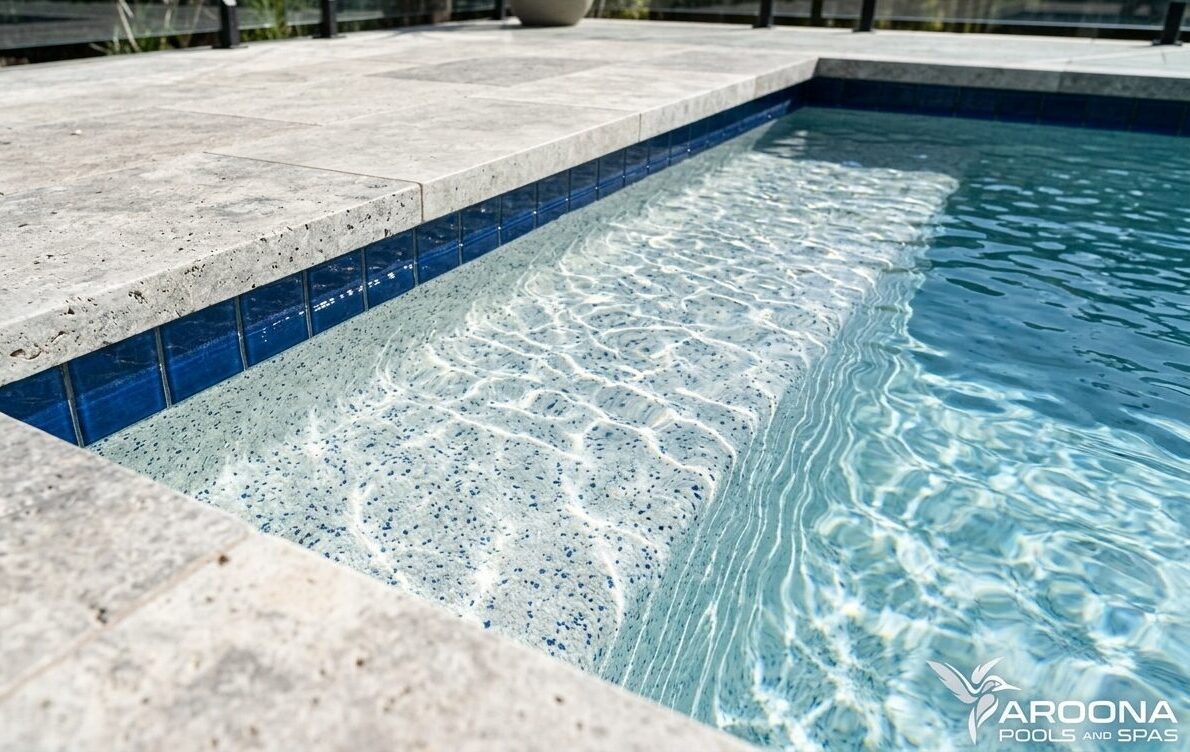
Brush natural stone coping and waterline tiles gently to stop sunscreen marks and stains.
-
Book regular pool cleaning Sydney visits whenever work and family life leave zero spare time.
Your 15-Minute Weekly Saltwater Swimming Pool Maintenance Routine
Small weekly checks beat big weekend rescue missions every single time. Follow these four quick steps to stay ahead of Sydney weather swings.
1. Clear Skimmer and Pump Baskets
Leaves, gum nuts, and dust gather fast across the Hills District, Ryde, and the North Shore. Pop the skimmer lid open and empty the basket every week. Check the hair-and-lint pot inside your pump too. Full baskets restrict water flow and force your pump motor to work much harder than needed.
2. Check Your Water Level
Your water should sit near the middle of the skimmer opening. Hot westerly winds pull water out fast through evaporation. If the level drops below the skimmer throat, the pump sucks in air and risks running dry. After heavy summer rain, make sure water stays below the top edge of the opening so floating leaves skim away cleanly.
3. Test pH, Chlorine, and Stabiliser
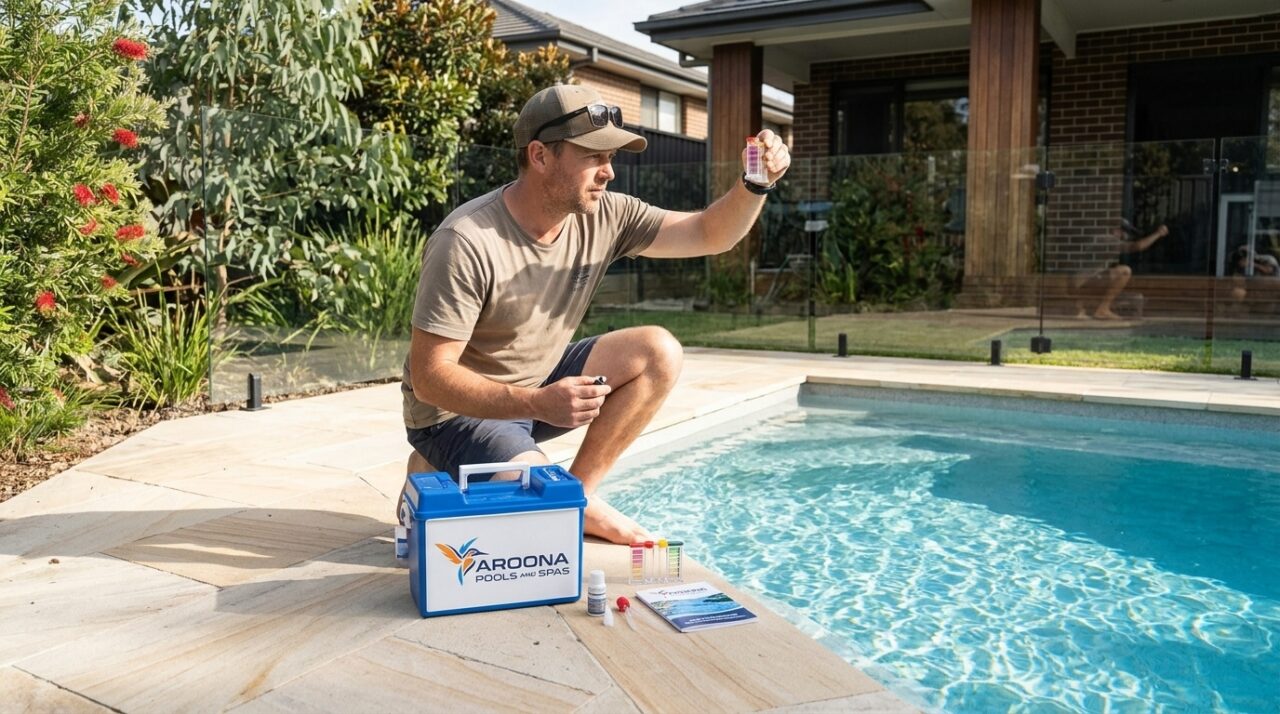
Grab your water test kit once a week in summer and every fortnight in winter. Aim for a pH between 7.2 and 7.6. Keep free chlorine steady between 1.0 and 3.0 ppm. Saltwater chlorinators naturally push pH upward as they generate chlorine. Adding a small splash of pool acid keeps water comfortable on your eyes and helps your sanitiser work properly.
4. Brush Steps, Ledges, and Waterline Tiles
Even a strong robotic cleaner misses tight corners on submerged steps and shallow sun ledges. Give the walls and floor a quick sweep with a soft nylon broom once a week. Brushing lifts fine dust into the water so your filter catches it before algae spores settle.
Pump and Filter Tips for Residential Pool Maintenance
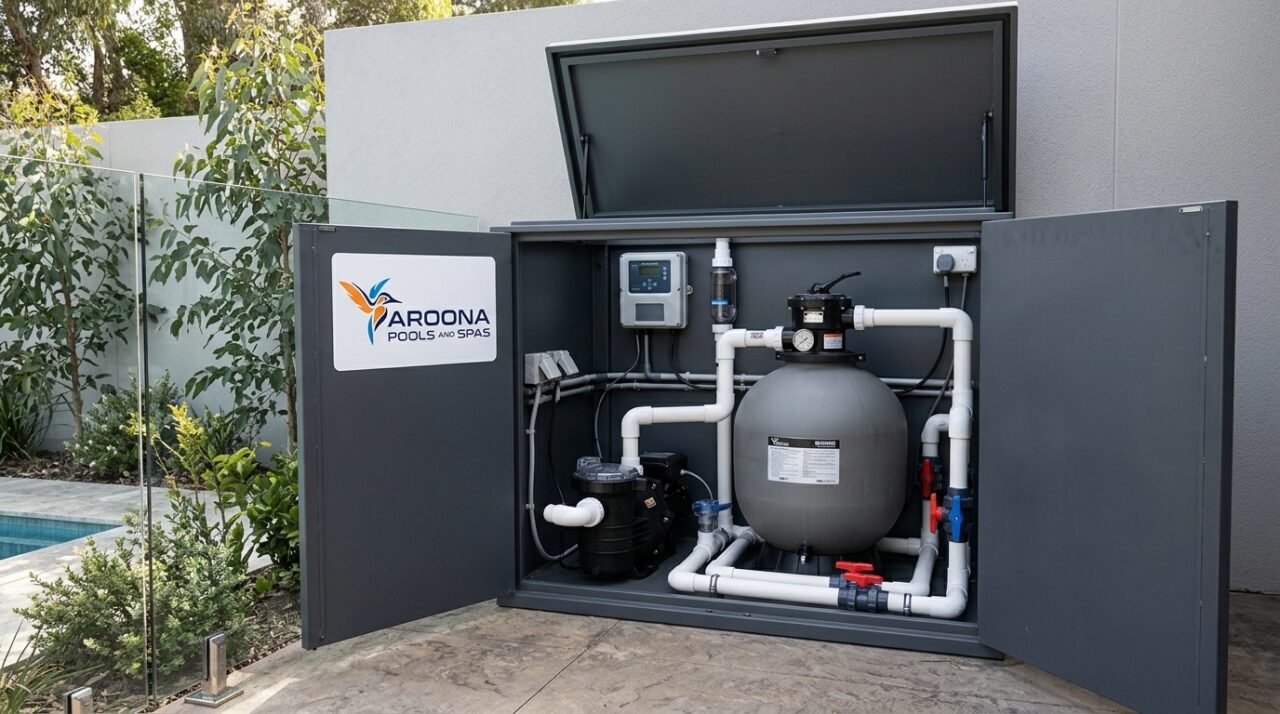
Modern filtration gear handles the heavy lifting in residential pool maintenance once you dial in the settings. Every Aroona concrete build includes an Astral variable-speed pump and an Astral CA280 sand filter with glass media. We also house that equipment inside an acoustic box so it stays quiet near side boundaries.
Adjust Run Times With the Seasons
Running a pump at full throttle for eight hours wastes electricity. Variable-speed pumps filter water far more efficiently at lower speeds over steady cycles. In peak Sydney summer heat, run your pump for six to eight hours daily on low or medium speed. Once cooler weather hits in May, wind that back to about four hours a day.
Care for Your Glass-Media Filter
Glass media traps finer dust than old silica sand and lasts much longer before needing replacement. Glance at the pressure gauge on top of your filter tank each week. When pressure climbs 50 to 70 kPa above its clean baseline, run a quick backwash and rinse cycle. Always direct backwash water to your sewer line rather than stormwater drains.
Salt Chlorinator and Mineral System Care
Saltwater and magnesium mineral systems remove the guesswork from daily dosing. Still, the electrolytic cell needs occasional checks. Aroona equips standard builds with an Astral EQ18 chlorinator. Many Sydney families pair it with magnesium-potassium minerals for silky, gentle water.
Keep Salt and Mineral Levels in the Sweet Spot
Heavy summer storms dilute salt levels faster than most owners expect. Test your salt or mineral reading in spring, mid-summer, and autumn. Most Australian chlorinators run best between 3,500 and 5,000 ppm, though you should check your unit manual first. Pour pool salt into the shallow end and brush gently until every grain dissolves.
Check the Cell for White Calcium Scale
Modern reverse-polarity cells clean themselves well. Even so, hard water and high pH can still leave chalky white plates inside the housing. Look through the clear cover once a month. If white flakes bridge the metal plates, switch the power off and unscrew the cell. Soak it briefly in a mild diluted cell cleaner. Never scrape plates with a knife or screwdriver, as scratching the coating ruins the cell.
Do Not Overlook Spa Pool Maintenance
An integrated spillover spa heats up quickly, which speeds up evaporation and chemical demand. For easy spa pool maintenance, run spillover circulation daily so fresh filtered water flushes through the basin. After a warm evening soak, check pH and lift sanitiser output slightly to keep the water crisp.
Protecting Stone Coping, Tiles, and Concrete Finishes
Smart saltwater swimming pool maintenance also protects the finishes you paid for. Balanced water prevents both rough calcium scale and etching across pebblecrete, quartz, and tiled shells.
-
Rinse Salt Splash Off Stone: Natural travertine and granite coping look brilliant beside concrete pools. Hose down your perimeter edges with fresh tap water every few weeks in summer to rinse off dried salt.
-
Keep Your Waterline Clean: Sunscreen oils and pollen leave faint rings along glazed waterline tiles. Wipe them gently with a soft sponge and non-abrasive tile cleaner before stains bake in the sun.
-
Let a Robotic Cleaner Help: Drop a Zodiac VX45 robotic cleaner into the pool once or twice a week. It scrubs floors and walls thoroughly without loading up your skimmer basket.
Step-by-Step Seasonal Pool Care Schedule
Splitting chores across the calendar keeps saltwater swimming pool maintenance simple and predictable.
-
Spring Tune-Up (September to October): Test salt and stabiliser levels, check the chlorinator cell, and inspect pump O-rings. Increase daily filter run times before warm weather arrives.
-
Peak Summer Care (November to March): Stick to your 15-minute weekly routine. Test water straight after summer storms or big pool parties, and empty baskets often.
-
Autumn Wind-Down (April to May): Scoop falling leaves quickly so organic tannins never stain your interior finish. Trim daily pump run times back as temperatures drop.
-
Winter Readiness (June to August): Run your variable-speed pump about four hours a day. Check water balance every fortnight and test your pool gate latches before spring returns.
Prefer Hands-Free Pool Service Sydney Homeowners Trust?
Some weeks simply get too busy to juggle test kits, salt bags, and leaf scoops. When you would rather swim than test water, our pool cleaning Sydney team steps in and handles everything.
Through our dedicated pool maintenance service, Aroona Pools & Spas offers regular visits and one-off health checks across Greater Sydney. Our technicians test and balance your water, check your Astral pump and chlorinator, empty baskets, and vacuum the shell. We also spot small seal or O-ring wear before bigger repairs pop up. You can even drop into our Seven Hills showroom (4/2 Anvil Road) or Top Ryde kiosk (B2 Level, Top Ryde Shopping Centre) for practical tips on water care or gear upgrades.
Safety Barriers and NSW & ACT Compliance Reminders
Routine care goes well beyond clear water. Checking your surrounds regularly keeps your family safe and your property compliant all year.
-
Standards Australia (AS 1926.1): Inspect your pool fence hinges and latches every season under Standards Australia AS 1926.1. Your safety barrier must stand at least 1.2 metres high outside. Keep the 900mm Non-Climbable Zone completely clear of pot plants, chairs, or toys. Every gate must swing outward and self-latch reliably.
-
NSW Swimming Pool Register: Check that your pool stays listed on the NSW Swimming Pool Register, especially before selling or leasing your home.
-
NSW Planning Portal and BASIX: Follow NSW Planning Portal rules by routing filter backwash to your sewer line, never into street gutters or stormwater drains. Using a fitted pool cover also cuts water loss and supports NSW BASIX water-saving goals.
-
ACT Government Planning: Under ACT Government Planning, Canberra owners must maintain compliant fences and route filter backwash from larger pools strictly to sewer lines.
-
SPASA Australia: Follow SPASA Australia safety advice and keep a current resuscitation (CPR) sign clearly visible inside your pool enclosure.
Common Questions About Saltwater Swimming Pool Maintenance
How often should I test my saltwater pool water in Sydney?
Test pH and free chlorine once a week across spring and summer. Run an extra check after heavy rain or busy pool parties. During cooler Sydney winters, testing once a fortnight usually keeps your balance right on track.
How long should a variable-speed pool pump run each day?
In summer, run your pump six to eight hours daily on an energy-saving low or medium speed. That turns your full water volume over properly. In winter, dial it back to about four hours per day.
Does a mineral pool need different care from a saltwater pool?
Daily routines stay almost identical. Magnesium mineral pools still rely on a chlorinator, a quality filter, and weekly pH checks. Many owners notice softer water, clearer sparkle, and less calcium scale on waterline tiles.
What if my saltwater pool still looks cloudy or green?
Cloudy or green water usually means high pH, low chlorine, a dirty filter, or short pump cycles. Test and lower your pH first, brush every wall thoroughly, and run the filter non-stop. If the water stays stubborn, book a professional pool service Sydney visit to clear it fast.
Need Help Keeping Your Pool Swim-Ready?
Whether you need regular pool cleaning Sydney visits, a quiet equipment upgrade, or advice on a custom concrete build, our team is ready to help.
To explore your options, use the pool cost calculator or book a site visit.
Contact the Aroona Pools and Spas team or call (02) 9460 0737 directly.
Follow us on our socials, Facebook & Instagram, for more tips and updates.
Local Compliance Disclaimer: Filter backwash discharge regulations, water-saving requirements, and safety barrier compliance inspections vary across Greater Sydney councils (including The Hills Shire, Northern Beaches Council, City of Ryde, Ku-ring-gai Council, and Parramatta Council) and ACT Planning, and require site-specific verification.